This site is under construction — content and design are still being finalized.

Politics · Philosophy · Culture · History

Machiavelli

Machiavelli

Aristotle

Aristotle

Goethe

Goethe

Claes G. Ryn

Emeritus Professor of Politics, The Catholic University of America

Irving Babbitt

Babbitt

Edmund Burke

Burke

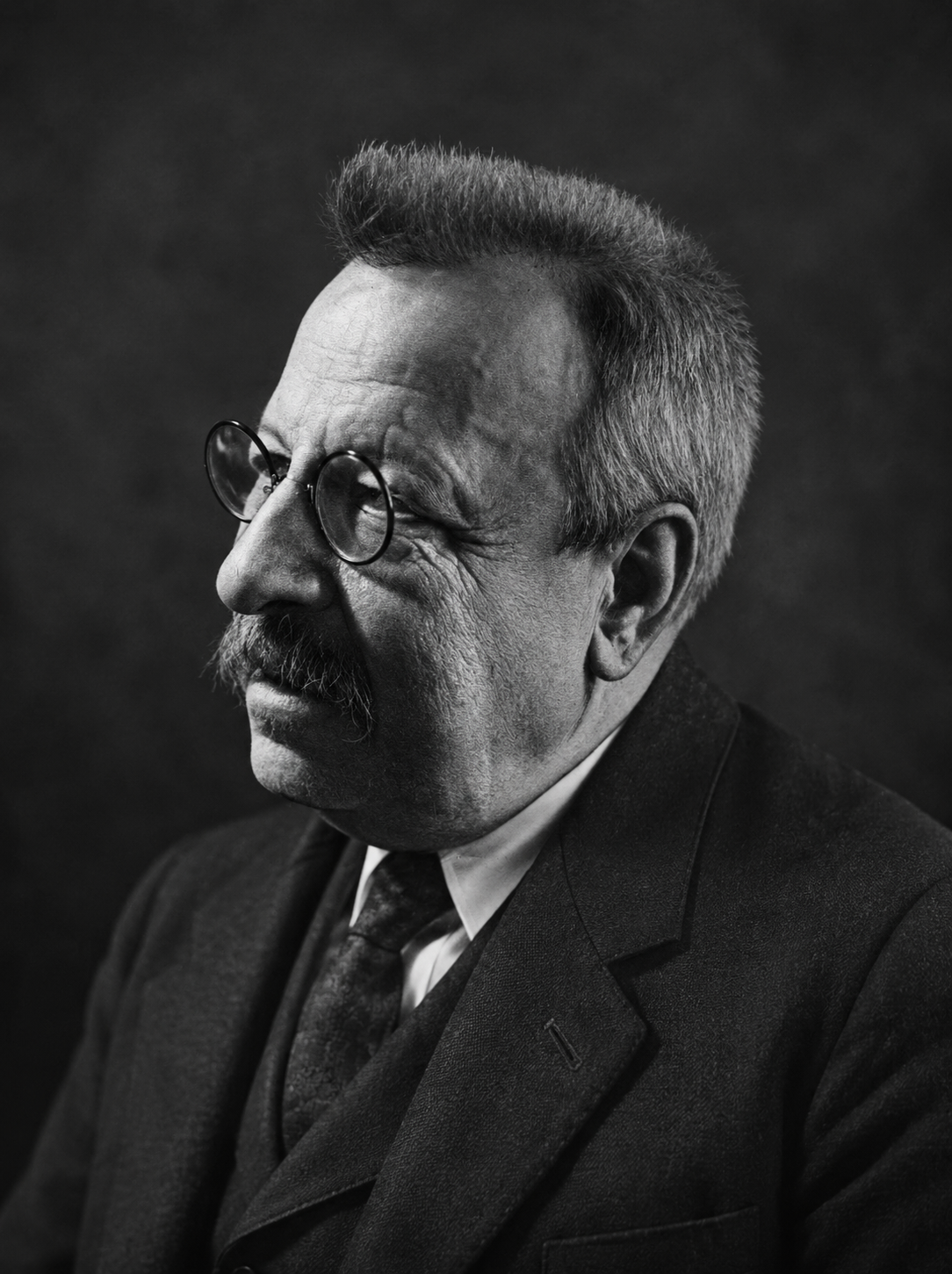
Benedetto Croce

Croce

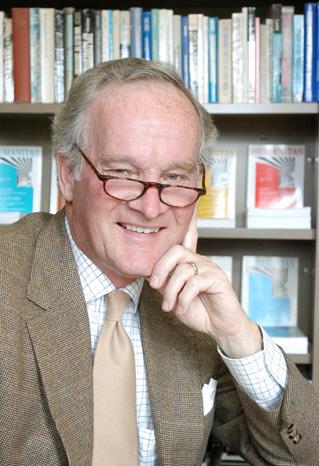
Portrait of Claes G. Ryn

Biography

Claes Ryn is Emeritus Professor of Politics and Distinguished Senior Scholar and Founding Director Emeritus of the Center for the Study of Statesmanship at the Catholic University of America, where he was also Chairman of his Department. He has taught also at the University of Virginia and Georgetown University.

His scholarship has focused on ethics and politics, politics and culture, constitutionalism, international relations, the history of Western political thought, and epistemology. His many books include Democracy and the Ethical Life: A Philosophy of Politics and Community; America the Virtuous: The Crisis of Democracy and the Quest For Empire; A Common Human Ground: Universality and Particularity in a Multicultural World; and, most recently, The Failure of American Conservatism and the Road Not Taken.

He has lectured widely in the United States, Europe, and Asia, especially China, where he has been seven times at the invitation of leading academic institutions such as Peking University, the Chinese Academy of Social Sciences, China Foreign Affairs University, and Beijing Normal University. He gave the Distinguished Foreign Scholar Lectures at Peking University in 2000, which also published these lectures in Chinese translation as a book. In 2012 Ryn was named Honorary Professor at Beijing Normal University. Three of his books and many of his articles have been published in translation in China.

Claes G. Ryn lecturing at Peking University

Lecturing at Peking University in 2000.

Professor Yue Daiyun introducing Claes G. Ryn

Professor Yue Daiyun introducing the speaker.

He was president of the Philadelphia Society, Chairman and co-founder of the National Humanities Institute, and President and co-founder of the Academy of Philosophy and Letters.

View C.V. →

Featured Interview

A Conversation with Claes Ryn

Recorded at the author’s home in Potomac, Maryland.

Philosophical Beliefs

Moral-Spiritual Life and Character

Claes G. Ryn

The philosophical point of view that has informed Ryn’s many years of writing and teaching is that the crux of human existence is the moral-spiritual life, specifically the state of personal character. Humanity faces inevitable, recurring challenges and unavoidable constraints and must contend with great suffering, much of it self-inflicted, but it can make the best of its condition and can in the midst of infinitely diverse personal circumstances move towards a shared, higher purpose. Human beings can through sustained effort and struggle against their own individual weaknesses implement a universal moral imperative. The resulting social harmony and corresponding cultural elevation is, although by its nature imperfect and fragile, its own reward.

A decent personal, social, and political order is, Ryn argues, the result of centuries of diverse and elaborate individual and collective striving. Although civilization has many aspects, the key to its realization and preservation is the personal moral striving of its members. There is above the passions and desires of the moment a special power of discernment, discrimination, and selection that unifies human beings across social, economic, and even national divides. A transcendent, universal will shows by censuring impulses incompatible with its purpose that they are degrading and dangerous. All the higher religions and moral systems recognize this sense of higher direction in some way. In Christianity one name for this special magnetic pull has been “The Holy Spirit.” Although it refers to a power that transcends persons, it is experienced by them individually and guides them in their particular circumstances. Their chief enemy, other than dangers beyond their control, is their own merely self-indulgent desires, their narrowmindedness and recklessness.

… an inherently authoritative power of moral discernment, discrimination, and selection that unifies individuals across social, economic, and even national divides.

Ryn stresses that moral-spiritual good is an ordering of the inner life, a subduing of degrading impulse that lets experience consonant with the higher will take hold. Goodness and morality is not an abstraction — that is, something empty of experiential content. It is not defined by rational “principles” of some kind but synthesizes universality and particularity, the former selectively blending with the latter. Transcendence acquires historical form, is incarnated, in the concrete, though often in sharp tension with the historical forces that oppose it.

Will, Imagination, and Reason

Ryn draws attention to the central role of the imagination in shaping perception and action. What governs conduct is the nature of the interaction between will and imagination. The imagination is, most generally, the sense of the nature of existence that forms the comprehensive, intuitive background for all that we do and think. It is the preconceptual grasp of what life and the world are like. It forms the basis of human consciousness and orients the person for good or ill. Depending on the person’s background and previous life, the imagination and the inclination of will behind it predispose the person — be it to a meaningful, mediocre, or miserable life.

What generates conduct is always a concrete vision of something desired, whether moral or immoral.

What pulls the person towards an inherently rewarding existence, ultimately towards serenity, is imagination inspired by the higher will. But so does an imaginative inclination generated by frivolous, egotistical, perverse passion induce action destructive of personal and social well-being.

Value-Centered Historicism

Claes G. Ryn

Ryn’s philosophical stance has become known as value-centered historicism. It is rooted in consideration of issues of ethics, aesthetics, and epistemology in their interconnections. His understanding of the higher potentialities of human existence takes full account of the variability and historicity of life and of the element of truth in “realistic,” “pessimistic” views of human nature favored by thinkers ranging from St. Augustine to Thomas Hobbes to modern theorists of international relations. But he challenges an exaggerated emphasis on human egotism and depravity and a corresponding need for authoritarian rule. Most importantly, he retains, though in reconstituted form, the ancient belief in moral universality.

Formally a professor of politics with a specialization in political philosophy, Ryn takes an interdisciplinary approach to the study of politics and life generally, emphasizing the moral, cultural, and historical aspects of human society. He has explored the moral and cultural preconditions of peaceful, respectful relations among persons, groups, nations, and civilizations. Persons and peoples may by cultivating the best of their respective traditions realize and enrich “a common human ground” of goodness, truth, and beauty, which harmonizes diversity.

He has applied his value-centered historicism to different aspects of politics — formulating a new grand strategy for the conduct of foreign policy and international relations, writing extensively about democracy and constitutionalism, and demonstrating that popular rule can be understood in radically different ways. He has been a sharp critic of the pervasive modern ideology of democratism that celebrates democracy in theory but actually hides an elitist disdain for popular opinions not to the liking of the democratists. Ryn is most generally sharply critical of the ideological, abstract, ahistorical, often dreamy strains of modern thought.

Civilization urgently needs cultural critics who are able to unmask imaginative habits in society that tempt people into captivating but deluded experiments.

Claes G. Ryn

Ryn believes that the moral-spiritual basis of Western civilization has been badly, perhaps irreparably damaged and that several difficult problems stand in the way of restoring a realistic view of human existence and recovering a sense of universal values. A central problem of long standing is a failure to recognize the crucial need for moral character and a failure to understand how such character can be fostered. A closely related problem is not understanding the large role that the imagination will always play in steering human conduct, for good or ill. Civilization urgently needs cultural critics who are able to unmask imaginative habits in society that tempt people into captivating but deluded experiments.

Rationalism has been modernity’s wholly dominant view of reason, but it has long been challenged by a very different, more humane and encompassing idea of rationality. Sound philosophy recognizes that human existence, including consciousness itself, is an historically evolved and evolving whole. The present is a living past. The value-centered historicism that Ryn advocates recognizes the historicity of human consciousness, including that of philosophical thought itself, but rejects moral and epistemological relativism as normally understood. All civilizations recognize a universal, transcendent moral imperative in some way. But, Ryn contends, the ultimate values of goodness, truth, and beauty become known to human beings only in concrete form. They are not abstractions outside history. They come alive, are embodied, in living experience.

Ryn’s value-centered historicism reconstitutes ethics, aesthetics, and epistemology and challenges the dominant strains of so-called modernity, but it also revises and supplements notions of universal values in the classical and Christian traditions. Ryn applies his historicism to a broad range of personal, social, and political issues.